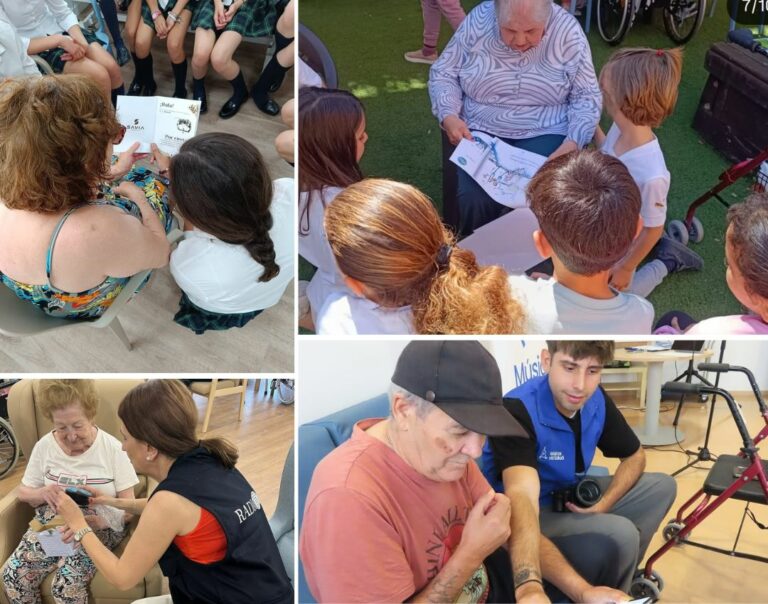
Corporate volunteering strategies are built from different elements: participation opportunities, high-impact activities, clear communication, and committed people who help drive the initiative within the organization.
However, when an organization commits to strengthening its connection with the community, a common challenge emerges: how can sustainable relationships be created that encourage participation and generate collaboration opportunities with the surrounding environment?
One answer lies in strengthening the role of individuals who act as a bridge between the organization and the community. In the case of Savia Residencias, the people acting as volunteering program ambassadors contribute to identifying collaboration opportunities with local organizations, associations, and other territorial stakeholders, facilitating the arrival of volunteering initiatives that enrich life within the residences. At the same time, they encourage the participation of residents themselves, promoting spaces where they can share knowledge, experiences, and skills with other people and groups.
This approach allows volunteering to be understood not only as a form of receiving support, but also as an opportunity to foster social participation, a sense of purpose, and active aging among older adults, strengthening the bonds between the residence and the surrounding community.
From volunteering to community building
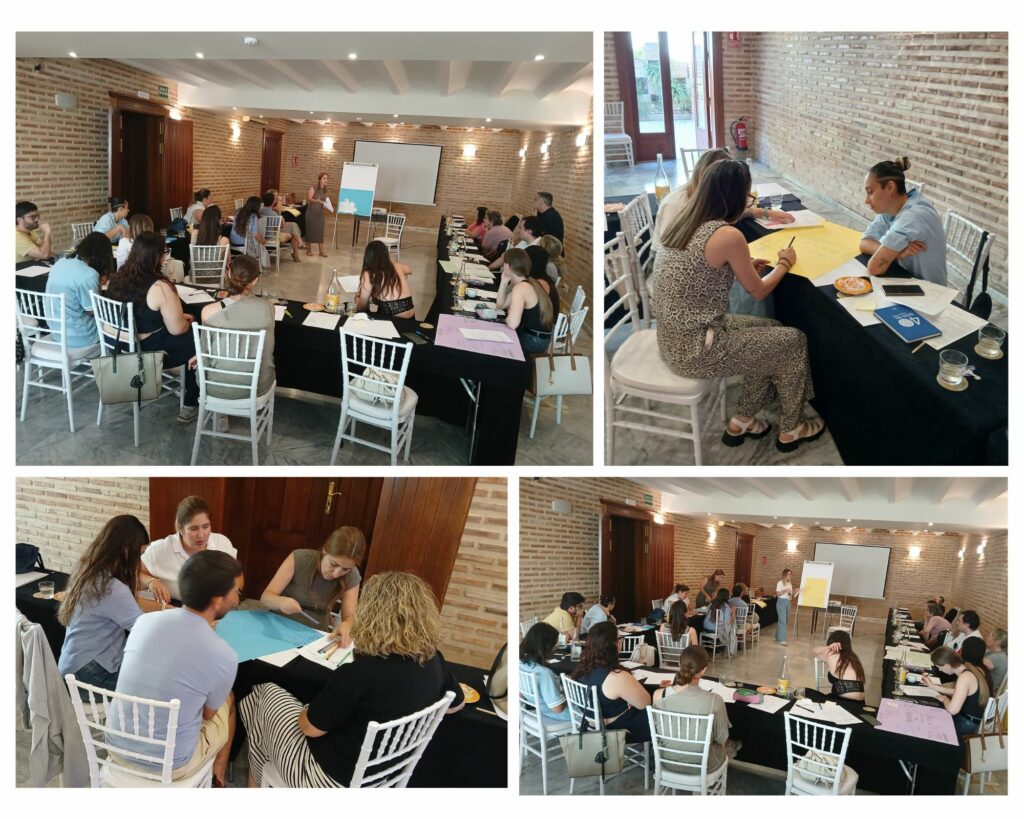
Recently, we had the opportunity to continue supporting Savia Residencias in the development of its volunteering strategy. As part of this process, we facilitated a new training session with its team of ambassadors, a space designed to strengthen their role as drivers of participation both inside and outside the organization.
Beyond understanding their role, the training aimed to generate ideas on how to activate participation from a perspective rooted in the local territory, the people, and the opportunities present in each context.
We often associate volunteering with the execution of specific activities. However, behind every action there is a network of relationships, conversations, and opportunities that make participation possible. Understanding this reality allows us to broaden our perspective and recognize that impact does not depend solely on the activities carried out, but also on the ability to build connections and mobilize people.
Looking at the environment to identify opportunities
Each team, residential center, and territory has key individuals, shared interests, meeting spaces, and resources that can become opportunities to drive volunteering initiatives. Identifying them is a fundamental step in designing actions that respond to the reality of each context.
From this perspective, the role of ambassadors is to observe, listen actively, and connect. Identifying what already exists, and can be turned into a driver for participation, is often more effective than trying to build entirely new processes from scratch.
Social innovation to drive participation
At Volies, we incorporate social innovation methodologies into our support processes because they help generate solutions driven by the participation of the people involved themselves.
During the session, we combined practical content with participatory dynamics based on opportunity mapping and co-creation. Through group work, the ambassadors felt heard and reflected on their daily reality, identified key stakeholders, explored potential barriers, and jointly built action proposals adapted to their contexts.
This type of methodology makes it possible to move from a vision focused exclusively on activity planning to a broader perspective, where relationships, contextual knowledge, and collective intelligence are also part of the strategy.
The Value of Brand Ambassadors
The role of ambassador does not replace activities, communication, or the volunteer strategy. The contribution of this role is to reinforce all these elements through a personal connection to and knowledge of their community.
These are people who help to:
- share information
- gather feedback
- identify opportunities
- and spark conversations that encourage others to get involved.
In short, they act as connectors between the strategy and the teams’ day-to-day experiences.
Because participation often does not begin when an activity is published or a call for participation is launched. It starts earlier: in a conversation, in a shared idea, or in someone who identifies an opportunity and decides to take the first step to make it happen.
And it is precisely here where participatory methodologies, social innovation, and the work of ambassadors can contribute to building volunteering strategies that are more closely connected to people and to the reality of each organization.