When I joined Volies in May 2025 as Community Engagement Coordinator for Amazon InCommunities in Aragón, I quickly realized that my role was not about launching projects, but about continuing to read a territory, its rhythms, sensitivities, and the unique ways in which its people and stakeholders interact. I say “continuing” because this has been the core purpose of my professional journey so far, particularly in the fields of rural depopulation and social innovation.

For context, Volies serves as a strategic partner providing Community Engagement Specialists to Amazon across Europe—from Dublin to Spain and France—as well as in the United States, where we act as a specialized technical office. We also coordinate corporate volunteering projects in Germany and Spain. This international presence allows us to understand both the needs of the territory and Amazon’s internal culture, acting as a bridge between the two realities. It is at this intersection of global vision and local roots where our work truly matters.
Aragón: A Returning Opportunity
For decades, Huesca, Zaragoza, and Teruel have experienced a steady outflow of local talent seeking competitive and stimulating professional opportunities. In recent years, however, the region has invested in diversifying its economy and attracting industries aligned with future growth, innovation, and potential.
Within this context, Amazon announced in 2019 its plan to establish three data centers in Aragón—located in El Burgo de Ebro, Villanueva de Gállego, and Huesca. In June 2021, the official confirmation of the AWS Region in Spain followed, becoming operational in November 2022. For the Government of Aragón, this represented an opportunity to attract and retain talent, create jobs, and place the region on the European map of the digital industry.

Yet, every industry needs more than infrastructure to thrive: it requires local integration and contribution to the existing ecosystem.
Amazon InCommunities: The Human Side of Technology
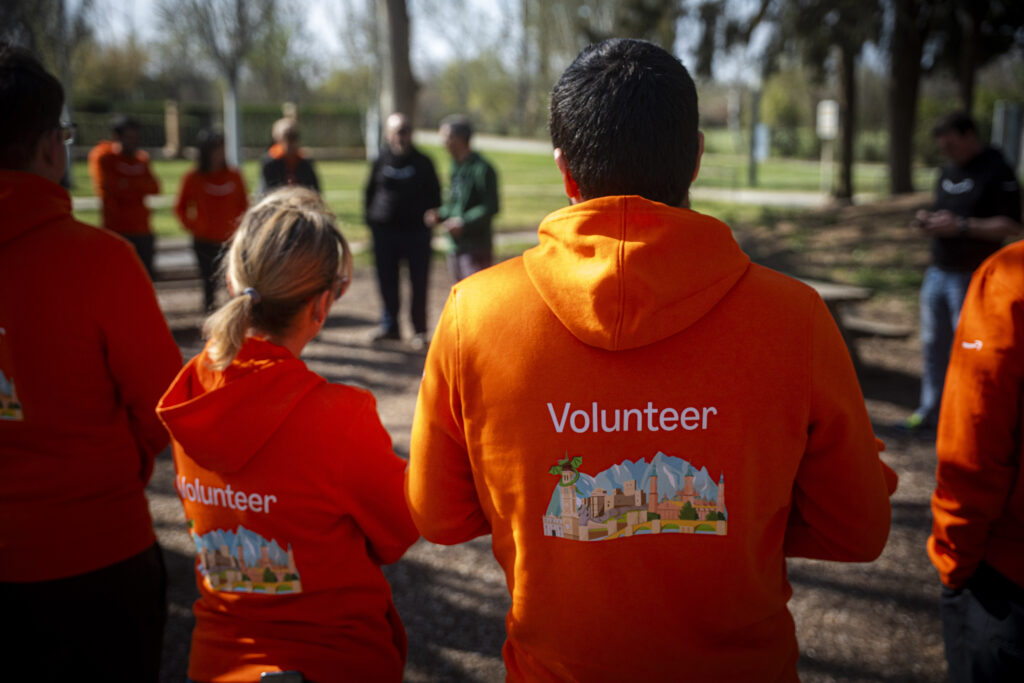
Amazon InCommunities is part of the company’s social area, with a simple philosophy: if we are part of a territory, we must behave as good neighbors.
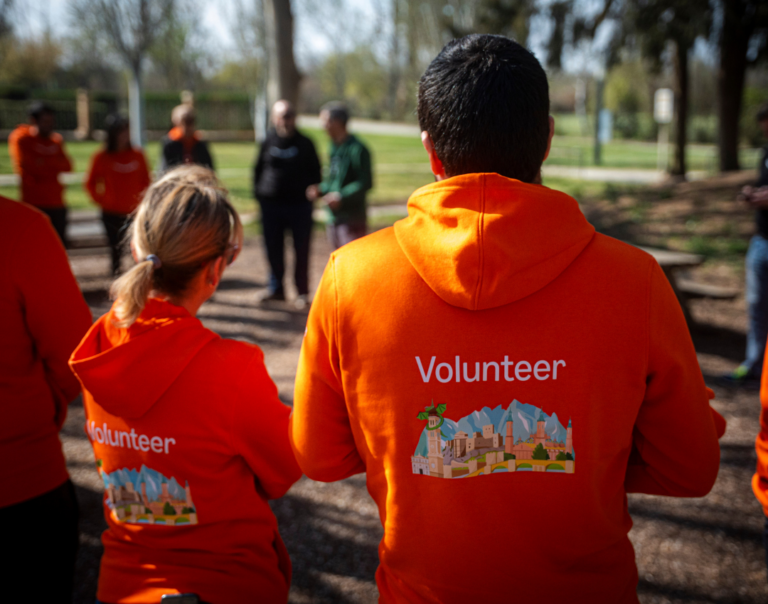
I understood this from day one, thanks to Amazon volunteers, the most human and committed face of the company, and the Amazon InCommunities team, including Carlos Valdés, Area Manager for Spain and France, who conveys this philosophy through words but, above all, through example. For many of us who were born or are deeply connected to Aragón, this approach resonates naturally. When a place is part of your story, work ceases to be merely technical; it becomes a heartfelt commitment. Those of us living its daily life don’t feel like visitors; we feel part of the territory.
Listening, Analysis, and Network: The Invisible Methodology
Every territorial process begins with listening, understanding, and adapting to the context. Imposing ideas only creates distance. Understanding which actors are involved, what needs are real, and how institutions, social entities, companies, and citizens relate to each other is the first step toward coherent action.
Adapting also requires understanding organizational cultures. Every corporation and social entity has its own language, rhythm, and way of working. Here, Volies plays a crucial role: we act as a bridge between the territory and the company, translating expectations, anticipating needs, and facilitating smooth collaboration. Being a strategic vendor is not just about providing a service; it is about understanding people, teams, and contexts to ensure alliances grow naturally.
This approach aligns with the philosophy of Smart Villages, common in Nordic countries, where territorial development is based on collaboration, sustainability, and technology serving the community. In Aragón, this logic was already present. Amazon’s mission has always been to complement, not replace.
Supporting What Already Works: Partnerships That Transform
One significant collaboration is with Apadrinaunolivo.org, a reference entity in rural sustainability and circular economy in Bajo Aragón. Together, we have launched projects such as OptiRiego, a technology that replaces traditional flood irrigation with more efficient drip systems, reducing water consumption and professionalizing agricultural management.
We also support the Somos del Pueblo initiative, which revives abandoned orchards to produce traditional goods and create employment opportunities for women from neighboring towns. Although different in scope, both projects share the same goal: revitalizing the territory by building on what already exists.
Another example is Think Big Space, an educational initiative by Amazon that brings robotics and programming to children across Aragón. It operates in partnership with Creative Hut—an Irish methodological partner and European STEM education reference—and Robotix, the implementing partner in Spain with extensive LEGO Education experience. These examples demonstrate that an external collaboration can integrate respectfully, coherently, and meaningfully when guided by listening and careful support.

To measure impact, we use Comgo, a platform that transforms actions into clear social indicators, helping Amazon and partner entities professionalize their assessment and communicate value. The impact is deeper when it is shared.
Allies of a Collaborative System
In networked work, alliances, and any collaborative system, a set of soft skills acts as silent allies. They sustain bonds, enable progress, and ensure relationships flow with respect and coherence:
- Empathy is not just about putting yourself in someone else’s shoes, but about understanding from which history, rhythm, and sensitivity each person acts. Active listening goes beyond merely hearing; it is about capturing nuances, silences, and needs that have not yet been expressed in words.
- Proactivity means anticipating calmly. It is about reading the ecosystem, detecting patterns, and acting before something becomes complicated, moving from a place of care rather than urgency.
- Systemic vision allows one to understand that every action affects the whole. In a territory where administrations, social entities, companies, and citizens coexist, everything is connected.
- Collaborative culture reminds us that no one transforms a territory alone. Its value lies in creating the necessary spaces for each actor to contribute from their talent and purpose, recognizing what already works, and fostering the complementary growth of initiatives.
- And then there is forgiveness, understood as the ability to recognize that conflict is natural when many people work together. It is not about ignoring it, but about learning to let go of what no longer serves, so that collaboration can continue advancing with clarity and without unnecessary burdens. In networked work, releasing the small things is what allows the essential to find space to grow.
These skills, together, form the foundation that allows a collaborative system to breathe, move forward, and remain alive.
With the calm rhythm that Labordeta brought to this land
If I’ve learned anything during this time, it’s that real impact doesn’t come from structures or names, but from relationships: from that very Aragonese way of listening, looking each other in the eye, and moving forward with a steady pace—but without hurry. And it’s impossible not to remember José Antonio Labordeta, who spoke of Aragón with profound honesty and steadfast tenderness. A teacher, writer, musician, and walker, he knew how to read this land as a network of people and stories worthy of care and accompaniment.
Labordeta didn’t just sing about the territory: he upheld it and gave it dignity. That calm rhythm, that way he moved forward with people—and not above them—remains a guiding example for those of us working close to the land. Because, in the end, what truly transforms is not haste or noise, but the humanity with which bonds are woven.
And perhaps, deep down, Labordeta was right in what his footsteps suggested: that paths become brighter when traveled together, in step with the people and the land.